USD 8.00
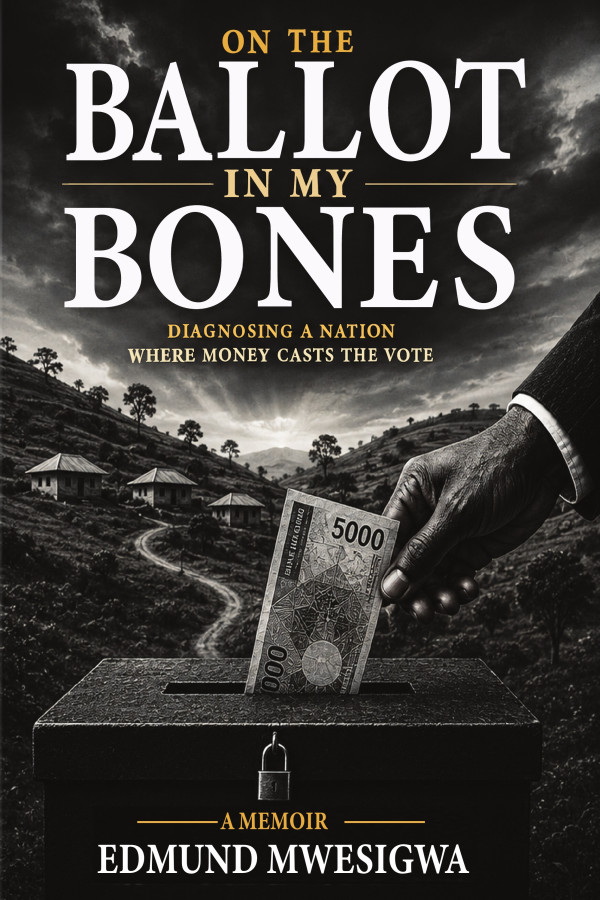
On The Ballot In My Bones: Diagnosing a Nation Where Money Casts the Vote is Edmund Mwesigwa’s deeply personal account of stepping into Uganda’s political arena and discovering what democracy looks like from inside an election. The memoir begins long before the campaign trail. Mwesigwa traces the experiences that shaped his understanding of service, family, community and responsibility before following his decision to contest for Member of Parliament in Kashari South. The journey moves through nomination, campaigning, the festive-season political scramble, polling day, tallying, defeat and, ultimately, renewal. Set against Uganda’s wider political and electoral history, the book examines how the country's relationship with power has evolved and how that history continues to influence the choices of candidates and voters today. Mwesigwa enters the race aware that the odds are uneven, but determined to test whether conviction, service and ideas can compete in an environment where money has increasingly become intertwined with political participation. At the heart of the memoir is what he calls “the sick man”, not an individual, but a metaphor for a condition in which corruption becomes normalized, money competes with ideas, leadership becomes transactional and communities gradually lower their expectations of accountability. The book asks uncomfortable questions about poverty, political influence, institutional weakness and the circumstances that can make immediate survival more compelling than long-term democratic reform. Yet On The Ballot In My Bones is not simply an indictment of politics, nor is it a grievance written after electoral defeat. Mwesigwa describes it as a record, an attempt to preserve experiences that are often forgotten once election results are announced. His story moves through childhood, formation, service, politics, loss, resistance, defeat and resolve, while acknowledging his own mistakes and the difficult point where idealism encounters political reality. The memoir also explores the hidden human cost of political participation: the families that carry a candidate's absence, communities divided by competition, supporters who take risks, and emerging leaders who step forward knowing that victory is far from guaranteed. Personal loss becomes part of this reflection, including the memory of Mwesigwa's brother and the conviction that silence in the face of failing systems is never neutral. But defeat is not where the story ends. Mwesigwa ultimately challenges himself and the reader to reconsider what victory means. If political success is measured only by seats won, he argues, many people committed to reform will always appear defeated. If it can also be measured through minds changed, conversations started and courage demonstrated, then losing an election can become the beginning of something larger. The book concludes with a call for a different relationship between citizens, leadership and democracy, one built long before polling day. Economic dignity, civic responsibility, stronger communities and leaders who serve between elections emerge as part of the remedy. For Mwesigwa, reducing vote buying cannot depend on moral condemnation alone; it requires addressing the conditions that make citizens vulnerable to it. On The Ballot In My Bones is therefore more than the story of one candidate who did not win an election. It is an invitation to voters, leaders, families and a new generation of Africans considering public service to examine what happens when democracy becomes transactional and to ask whether we still have the courage to imagine something better. As Mwesigwa makes clear, the ballot may have been counted, but the responsibility to heal what lies beneath it remains.
SIMILAR BOOKS